Quick checks
- Read the free track first and decide if it's enough on its own.
- Check whether anything that affects play is premium-only.
- Find out what happens to unclaimed rewards when the season ends.
- Compare tiers to weeks left to see if finishing is realistic.
- Agree that tier skips are not part of the deal before buying a pass.
What a battle pass is, in one paragraph
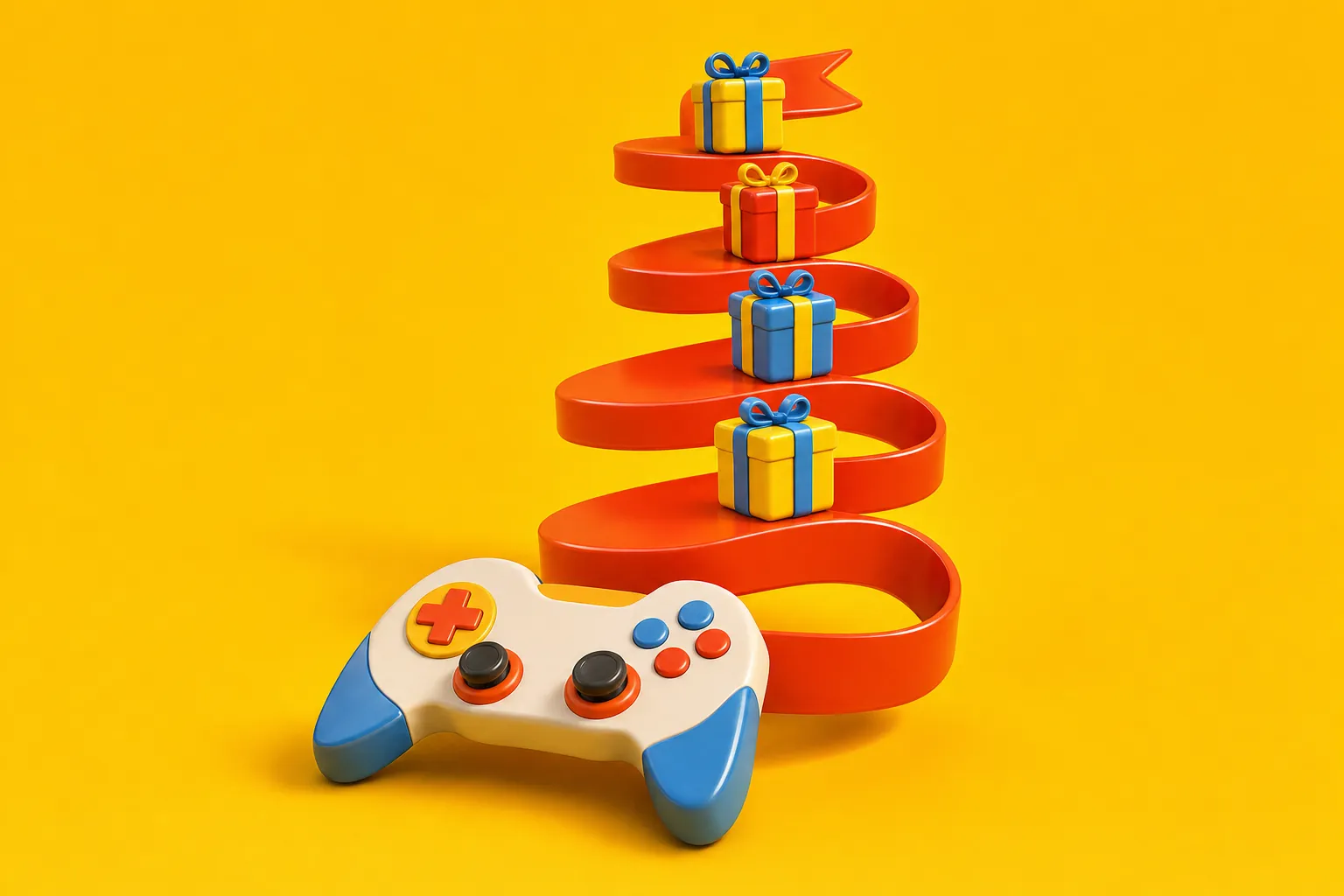
A battle pass is a list of rewards arranged in tiers or levels. You move up by earning experience from matches, challenges and daily or weekly tasks. Each level unlocks something: an outfit, an emote, some currency, a banner. Most passes run for a season of several weeks, after which a new pass with new rewards begins. Different games use different names, but the structure is very similar.
Passes became popular because they suit both sides. Players get a clear goal for the season and a predictable price instead of random rewards. Publishers get regular engagement and a purchase that comes round every few weeks. Whether that balance is fair depends on the details covered below.
Free track versus premium track
Most passes have two lanes. The free track is available to everyone and usually has fewer, simpler rewards. The premium track is unlocked by paying, typically with the game's own currency, and holds most of the headline items.
What to check on the free track:
- Does it include anything that affects play, such as characters or gear? If those only sit on the premium track, the pass leans towards pay-to-win.
- Does it include premium currency? Some free tracks drip-feed small amounts.
- Is it worth doing on its own? A generous free track is a good sign of how a game treats non-payers.
It is also worth checking how the premium track is priced. Many games sell the pass for premium currency rather than pounds, so the real cost depends on which currency pack you'd have to buy. Some also sell a more expensive bundle that includes a number of tiers already unlocked.
Tiers, experience and the grind maths
A pass is designed so that reaching the end takes regular play across the season. Publishers tune the experience needed per tier against how much a typical player plays, and they add weekly challenges to pull you back in.
You can do a rough check yourself: look at how many tiers there are, how many weeks the season lasts, and how many tiers a normal session gets you. If finishing needs more play than you would do anyway, the pass is effectively asking for extra hours, or for you to buy tier skips, which many games sell separately.
Weekly challenges deserve a separate look. In many games they award a large share of a season's experience, so missing a week costs more than missing a few ordinary matches. If you know you'll be away for part of the season, factor that in before paying for the premium track.
Watch out, too, for experience that only counts in certain modes. If the challenges push you into modes you don't enjoy, the pass is shaping how you play, not just rewarding it.
Expiry: the deadline that drives the design
The biggest difference between passes is what happens when the season ends. In many games, unclaimed rewards on that season's pass are gone once the season closes. That deadline is what makes passes feel urgent.
Not every game works this way. Marvel Rivals, for example, says its Luxury Battle Passes do not expire: once bought, you can keep redeeming their rewards in later seasons. Before buying any pass, check the game's own description of what happens at season end.
Some games also bring old passes or their rewards back later, through a shop rotation or a special event, while others say past items will never return. Either way, the deadline is a design choice, so treat "last chance" messaging as information rather than an instruction.
Passes that hand back currency
Some passes include enough premium currency across their tiers to cover some or all of the cost of the next one, if you finish. On paper, that means one purchase can carry you through several seasons. In practice, it only works if you reach the relevant tiers every season, and the currency could otherwise be spent in the shop.
Read the reward list rather than relying on the headline. Publishers' own help pages usually state how much currency a pass contains and when it changes.
The same applies the other way: if a pass hands back currency only on its last tiers, players who stop halfway get much less back than the headline suggests. Look at where on the track the currency rewards sit.
How PEGI's 2026 rules treat time-limited offers
PEGI, the age-rating system used in the UK, announced new criteria on 12 March 2026 for games submitted from June 2026. Among them, games with time-limited or quantity-limited offers default to PEGI 12, and features that reward coming back every day default to PEGI 7, rising to PEGI 12 if missing days means losing content or progress.
A seasonal pass sold for a limited window and built around daily tasks can fall into these categories. The new rules applied to newly submitted games, so an older game's rating may not reflect them yet. Paid random items are treated separately and more strictly, which our pay-to-win guide covers.
Reading a pass's reward list like a receipt
Before buying any pass, open its full reward list and sort the contents into three groups:
- Things you'd use: outfits for characters you play, currency you'd spend, unlocks you care about.
- Filler: sprays, banners, stickers and small items that pad out the tier count.
- Things that affect play: characters, gear or boosts. If these exist on the paid track only, note it.
If the first group is small, the pass is mostly a bundle of items you wouldn't buy individually. If the third group is large, the pass is part of the game's power curve, and free players will feel it. Neither is necessarily wrong, but it is better to know before paying than to find out at tier 40.
Battle passes and younger players
Passes are designed to bring players back regularly, which can sit awkwardly with screen-time limits and homework. If a child asks for a pass, it helps to agree beforehand that unfinished tiers are fine, rather than letting the deadline drive extra play or tier-skip purchases.
All the main platforms let a parent approve purchases or set a spending ceiling. See our pages on PS5, Xbox, Switch and mobile for where those settings live.
It can also help to look at a pass together before buying. Going through the reward list as a family turns a vague "everyone has it" request into a concrete decision about specific items, and it often settles whether the free track is enough.
Questions
Do you have to buy a battle pass to play?
No. In the free games we cover, the pass is optional. The free track is available to everyone, and the core game is playable without it.
What happens if I don't finish a battle pass?
In many games, unclaimed rewards disappear when the season ends. Some, such as Marvel Rivals' Luxury Battle Passes, don't expire. Check the game's own rules.
Is a battle pass pay-to-win?
Usually not, if its rewards are cosmetic. It moves towards pay-to-win when characters, gear or other power sit only on the paid track.
What is a tier skip?
A separate purchase that moves you up the pass without earning the experience. It is an extra cost on top of the pass itself.
Does PEGI rate battle passes?
Under criteria for games submitted from June 2026, PEGI defaults games with time-limited or quantity-limited offers to PEGI 12, which can include seasonal offers.
- https://pegi.info/news/pegi-expands-age-rating-criteria-interactive-risk-categories
- https://www.marvelrivals.com/devdiaries/20241225/40954_1202068.html
Spotted a change? Tell us and we will re-check the receipt.